What to Do When Your Car Overheats: Causes, Safe Steps & Prevention
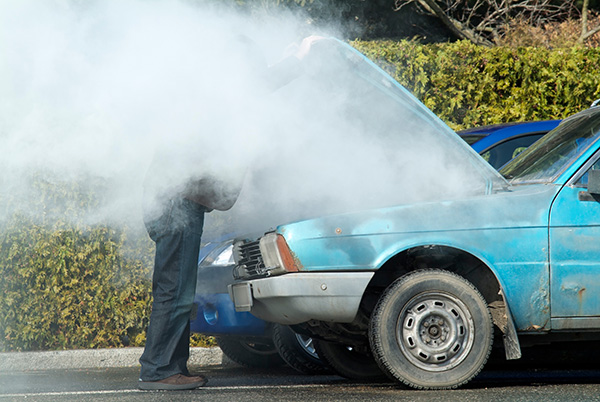
Steam rising from the engine bay indicates your car is overheating and needs immediate attention
If your **car overheats**, it can be stressful and potentially damaging to your engine. Knowing the signs, safe immediate actions, and common causes can help you avoid breakdowns and expensive repairs. At LMC Complete Automotive, we’ve helped countless drivers with **overheating car** issues—from simple coolant leaks to major component failures.
Whether your temperature gauge is spiking or you see steam, this guide covers what to do when your car overheats, why it happens, and how to prevent it.
Immediate Signs Your Car Is Overheating

Temperature gauge entering the red zone – a clear overheating warning
Watch for these warning signs:
- Temperature gauge rises into the red/hot zone
- Steam or smoke coming from under the hood
- Strange smells (sweet like coolant or hot metal)
- Warning light illuminated (engine temperature icon)
- Loss of power or engine hesitation
- Thumping or knocking noises from the engine
What to Do If Your Car Overheats (Safe Steps)
Stay calm and act quickly—engine damage can occur in minutes!
- Pull over safely: Find a safe spot, turn on hazard lights, and stop driving immediately.
- Turn off the engine: Let it cool down (this can take 30-60 minutes).
- Do NOT open the radiator cap while hot—pressurized coolant can cause severe burns.
- Check for visible leaks: Look under the car for puddles once it’s safe.
- Add coolant/water if safe: Only when cool, top up the reservoir (never pour cold water into a hot radiator).
- Call for help: If unsure or it overheats again, get towed to a shop like LMC Complete Automotive.
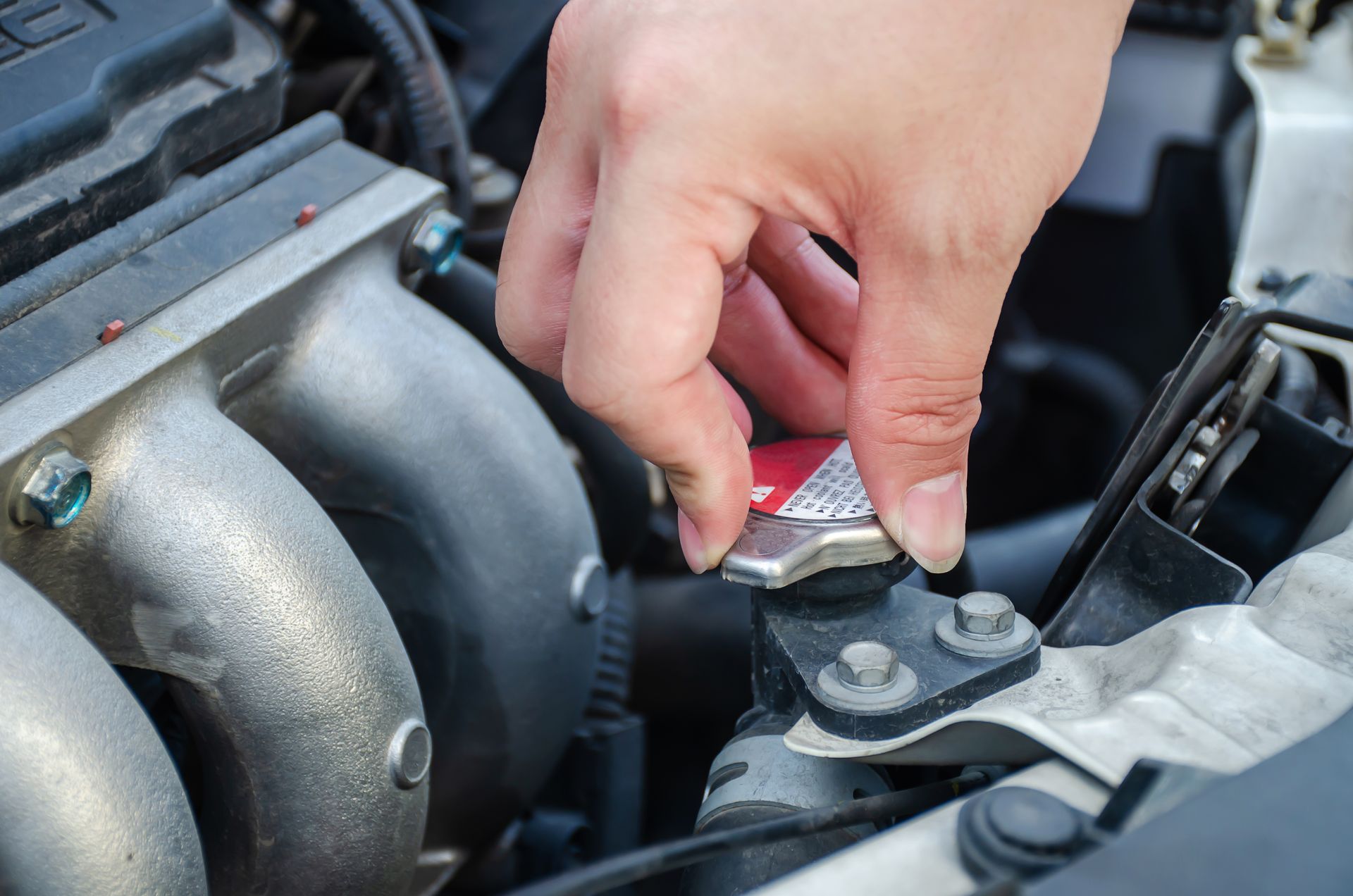
Safely checking coolant level after the engine has cooled
Common Causes of Car Overheating
Most overheating problems stem from cooling system failures:
1. Low Coolant Level or Leaks

Low coolant is the #1 cause of overheating
2. Faulty Thermostat

A stuck thermostat prevents proper coolant flow
3. Broken Water Pump or Radiator Fan

Failed water pump or fan stops coolant circulation
Other Causes:
- Clogged radiator
- Blown head gasket
- Slipping drive belt
- Faulty radiator cap
How We Diagnose and Fix Overheating at LMC Complete Automotive
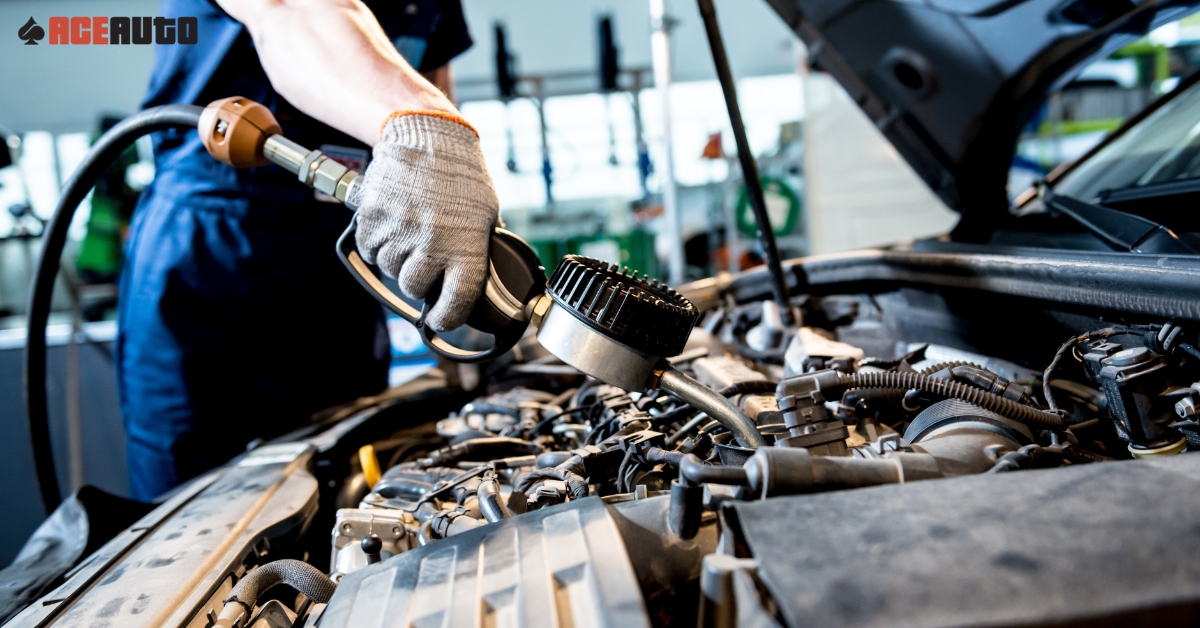
Expert diagnosis to pinpoint the exact cause of your car’s overheating
Our process includes:
- Pressure testing the cooling system
- Scanning for codes
- Inspecting hoses, belts, thermostat, and water pump
- Checking radiator and fan operation
- Accurate repairs with quality parts
How to Prevent Car Overheating
- Check coolant levels regularly
- Flush and replace coolant per manufacturer schedule
- Inspect hoses and belts for wear
- Never ignore warning lights
- Schedule annual cooling system maintenance
Conclusion: Act Fast When Your Car Overheats
An overheating engine is serious—pull over safely, let it cool, and get professional help if needed. Ignoring it can lead to cracked blocks or blown head gaskets costing thousands.
Experiencing overheating issues? Bring your vehicle to LMC Complete Automotive for fast, reliable diagnosis and repair.
For more detailed advice on handling car overheating, including common causes and prevention tips, check out AAA’s guide to car overheating.
Visit our scheduling page or contact us today—we’ll get you back on the road safely.
Updated December 2025 with current safety guidelines.