Wheel Alignment Services: Importance, Signs, and Benefits at LMC Complete Automotive
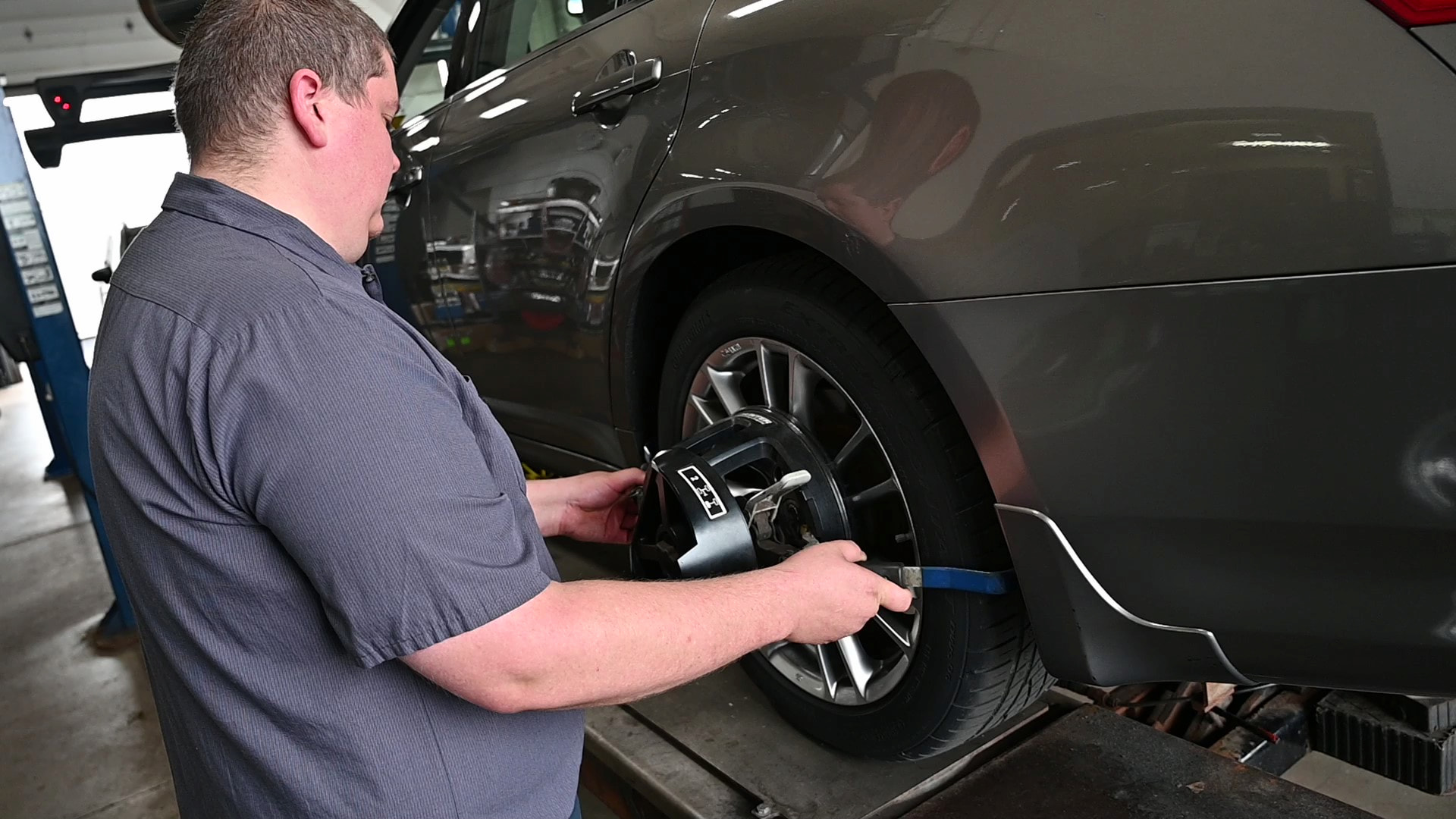
Professional wheel alignment in progress using advanced equipment
Proper **wheel alignment** (also called **car alignment** or **tire alignment**) is one of the most important maintenance services for your vehicle. Misaligned wheels can cause uneven tire wear, poor handling, reduced fuel efficiency, and safety issues. At LMC Complete Automotive, we use state-of-the-art equipment to provide precise front-end and four-wheel alignments for all makes and models.
Whether you’re noticing your vehicle pulling to one side or searching for **wheel alignment near me**, this guide explains everything you need to know about alignment services, signs of problems, and why regular checks save you money.
What Is Wheel Alignment and Why Does It Matter?
Wheel alignment adjusts the angles of your wheels to the manufacturer’s specifications. The three main angles are:
- Camber: The inward or outward tilt of the wheel (viewed from the front).
- Toe: The angle at which tires point inward or outward (viewed from above).
- Caster: The forward or backward tilt of the steering axis (viewed from the side).
Camber, caster, and toe: The key angles adjusted during a professional alignment
When these angles are off, it leads to premature tire wear, steering problems, and strain on suspension components. Regular alignments improve safety, extend tire life, and restore smooth driving.
Common Signs You Need a Wheel Alignment
Watch for these symptoms of misaligned wheels:
- Vehicle pulls or drifts to one side while driving straight
- Steering wheel is off-center or crooked when driving straight
- Uneven or rapid tire wear (e.g., more wear on inside/outside edges)
- Steering wheel vibration
- Loose or wandering handling
- Poor fuel economy

Common uneven tire wear patterns from misalignment
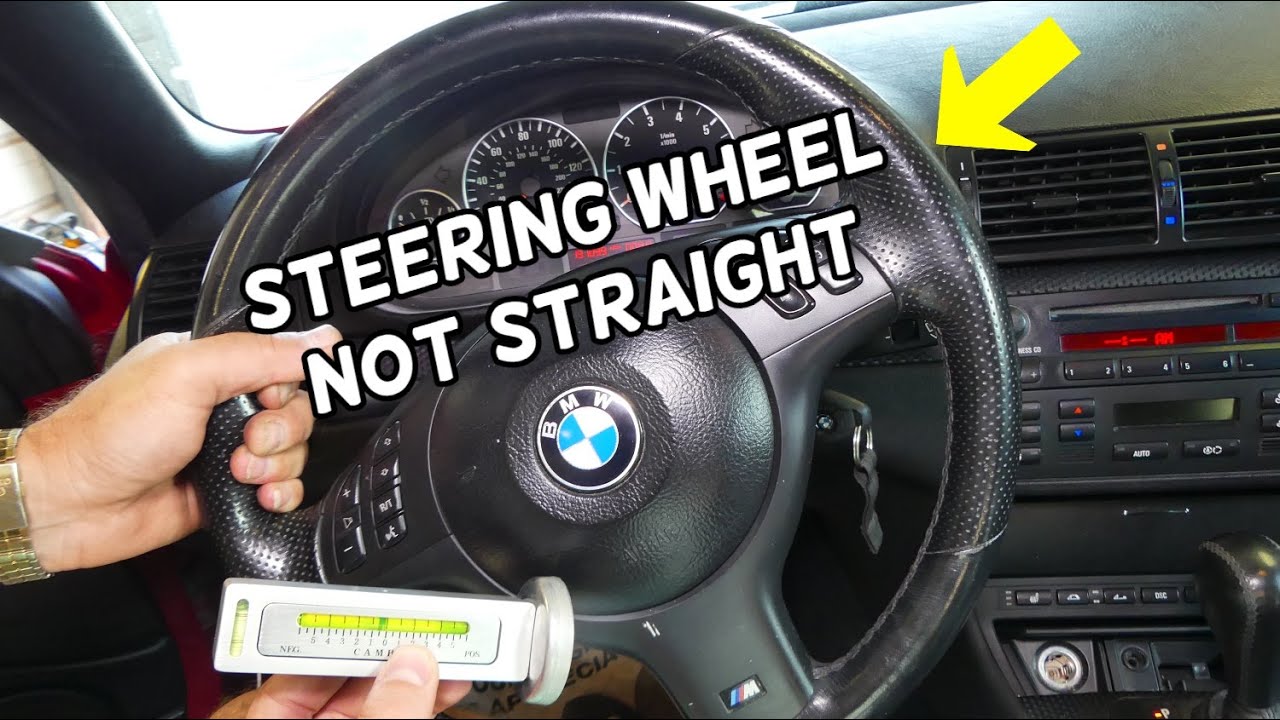
Off-center steering wheel is a telltale sign it’s time for an alignment
Benefits of Regular Wheel Alignment
Getting a professional alignment offers big returns:
- Longer tire life: Even wear can add thousands of miles to your tires.
- Better fuel efficiency: Properly aligned wheels reduce rolling resistance.
- Improved safety and handling: Predictable steering and better road grip.
- Reduced strain on suspension: Prevents costly repairs down the road.
- Smoother ride: Less vibration and wandering.
When Should You Get a Wheel Alignment?
Experts recommend checking alignment:
- Every 6,000–12,000 miles or annually
- After hitting a pothole, curb, or major bump
- When installing new tires
- If you notice any of the signs above
- After suspension or steering repairs
Our Wheel Alignment Process at LMC Complete Automotive
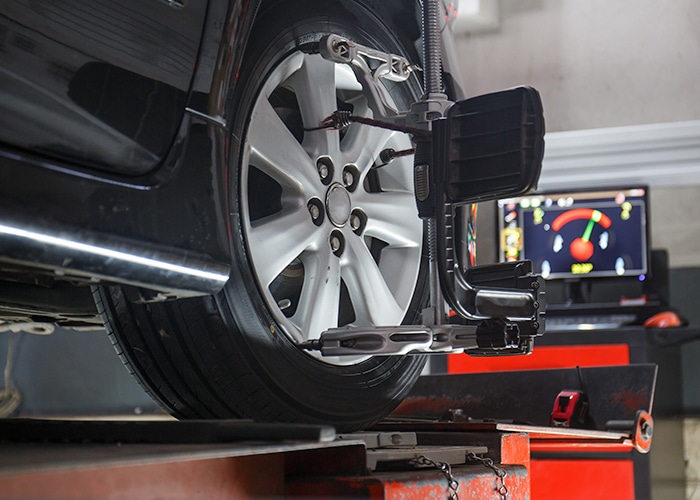
State-of-the-art alignment equipment ensures precision results
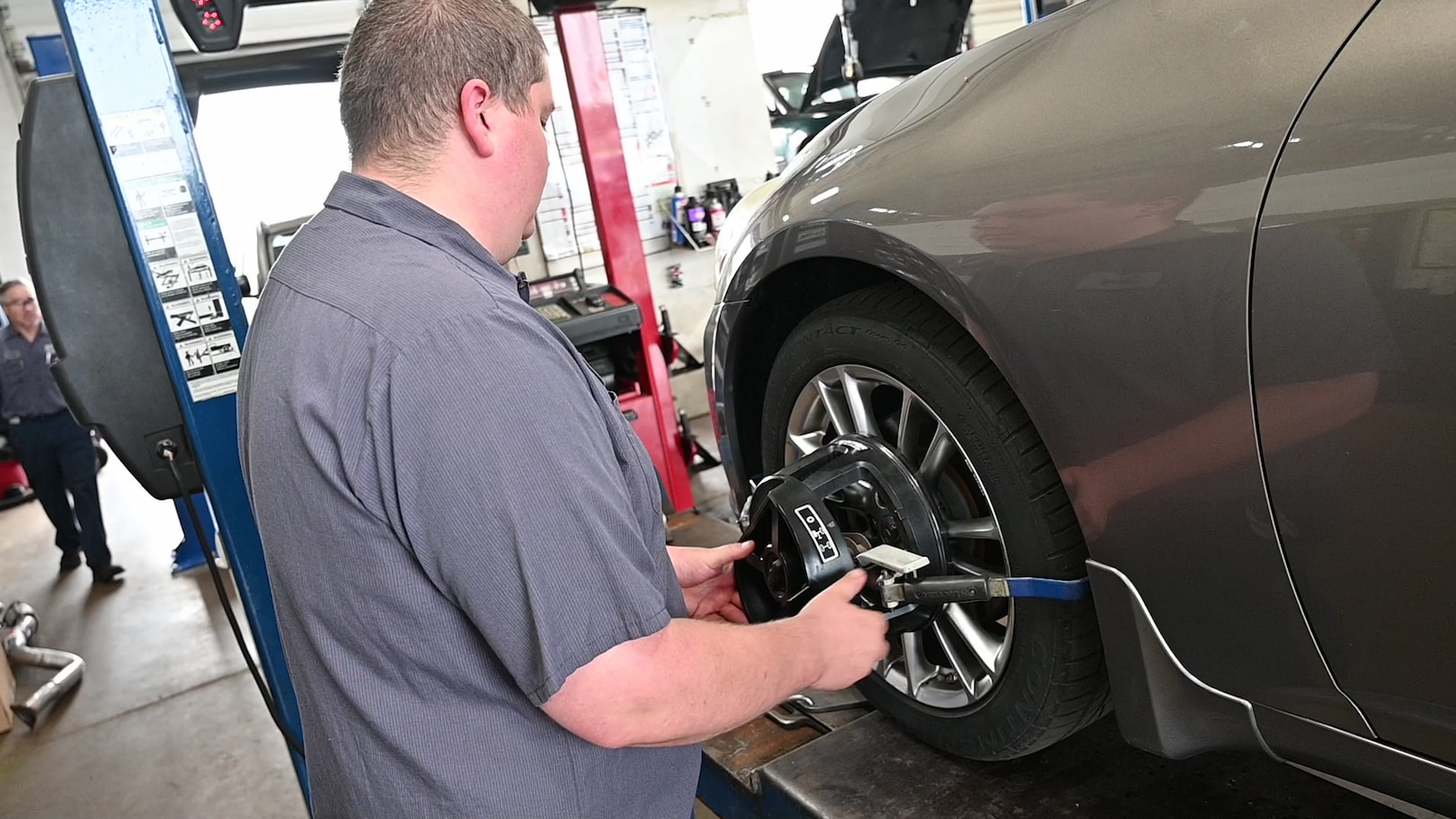
Precise sensor placement for accurate measurements
We perform thorough four-wheel alignments using advanced computerized systems:
- Comprehensive vehicle inspection
- Precise measurements of current angles
- Professional adjustments to factory specs
- Road test verification
- Printed before/after report for your records
Conclusion: Invest in Professional Wheel Alignment Today
Don’t wait for uneven tires or handling issues—a quick **wheel alignment** at LMC Complete Automotive can save you hundreds in premature tire replacements and improve your vehicle’s safety and performance.
Ready for smoother driving and longer-lasting tires? Schedule your alignment service today.
Visit our scheduling page or contact LMC Complete Automotive for expert wheel alignment you can trust.
Updated December 2025 with latest alignment best practices.