
Example of a typical electric cooling fan in modern vehicles
If you’ve noticed your car’s cooling fan stays running after shutting off the engine, you’re not alone—this is a common concern for many drivers. In most cases, it’s completely normal for the radiator fan (or engine cooling fan) to run for a few minutes after turning off the ignition. However, if it runs excessively long (more than 10-15 minutes) or constantly, it could signal an underlying issue.
At LMC Auto Repair, we’ve diagnosed and fixed this problem many times. This guide explains why it happens, when it’s normal vs. problematic, common causes, and what to do next—whether you’re searching for cooling fan stays on after engine off or radiator fan running constantly.
Is It Normal for the Cooling Fan to Run After Engine Shutdown?
Yes, often it is! Modern vehicles are designed with safety features to protect the engine:
- When you turn off the engine, coolant stops circulating, but residual heat (“heat soak”) can build up in the engine bay.
- The electric cooling fan kicks on (or continues running) to pull air through the radiator and dissipate this heat, preventing damage to components like the turbo (if equipped), seals, or electronics.
- This “after-run” or “post-shutdown cooling” typically lasts 2-10 minutes, depending on how hot the engine was and ambient temperature.
In vehicles like Chevrolet, GMC, Ford, Honda, and many others, this is a programmed feature by the ECU (engine control unit) for engine longevity.
Common Reasons Why the Cooling Fan Won’t Turn Off
If the fan runs longer than usual or won’t shut off at all, here are the most frequent causes:
1. Faulty Coolant Temperature Sensor (ECT Sensor)
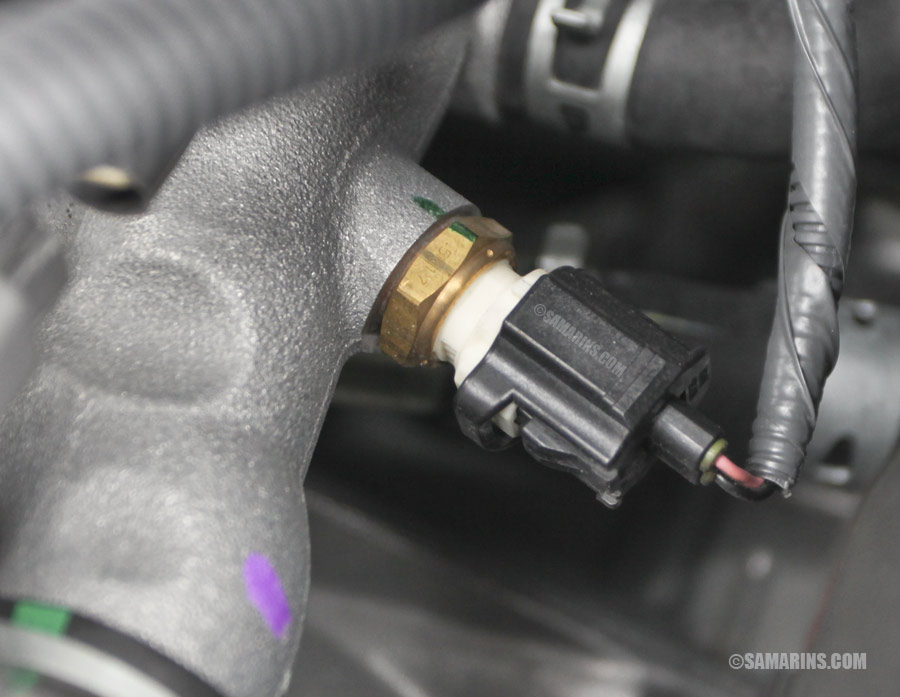
Typical engine coolant temperature sensor (ECT)
The sensor tells the ECU the engine’s temperature. If it’s faulty or wiring is damaged, the ECU may think the engine is overheating (or can’t read the temp properly) and keeps the fan running as a failsafe.
2. Stuck Thermostat

Example of a faulty thermostat that can cause extended fan operation
A failing thermostat (like in the real-life 2014 Chevrolet Silverado case below) prevents the engine from reaching proper operating temperature. This triggers codes like P0128 and activates the fan continuously for protection.
3. Low Coolant Level or Cooling System Issues
Low coolant, leaks, air pockets, or a clogged radiator can cause actual overheating, prompting extended fan operation.
4. Stuck Cooling Fan Relay

Cooling fan relay – a common culprit when the fan runs constantly
The relay controls power to the fan. If it sticks closed (due to age, corrosion, or heat), the fan gets constant power and won’t turn off.
5. A/C System Pressure or Recent Use
If the A/C was on recently, high refrigerant pressure can keep the condenser fan running longer. Faulty A/C pressure sensors can also cause this.
6. ECU or Wiring Problems
Rarely, a glitch in the computer, shorted wiring, or bad ground can command the fan to stay on.
Signs It’s a Problem (Not Normal Behavior)
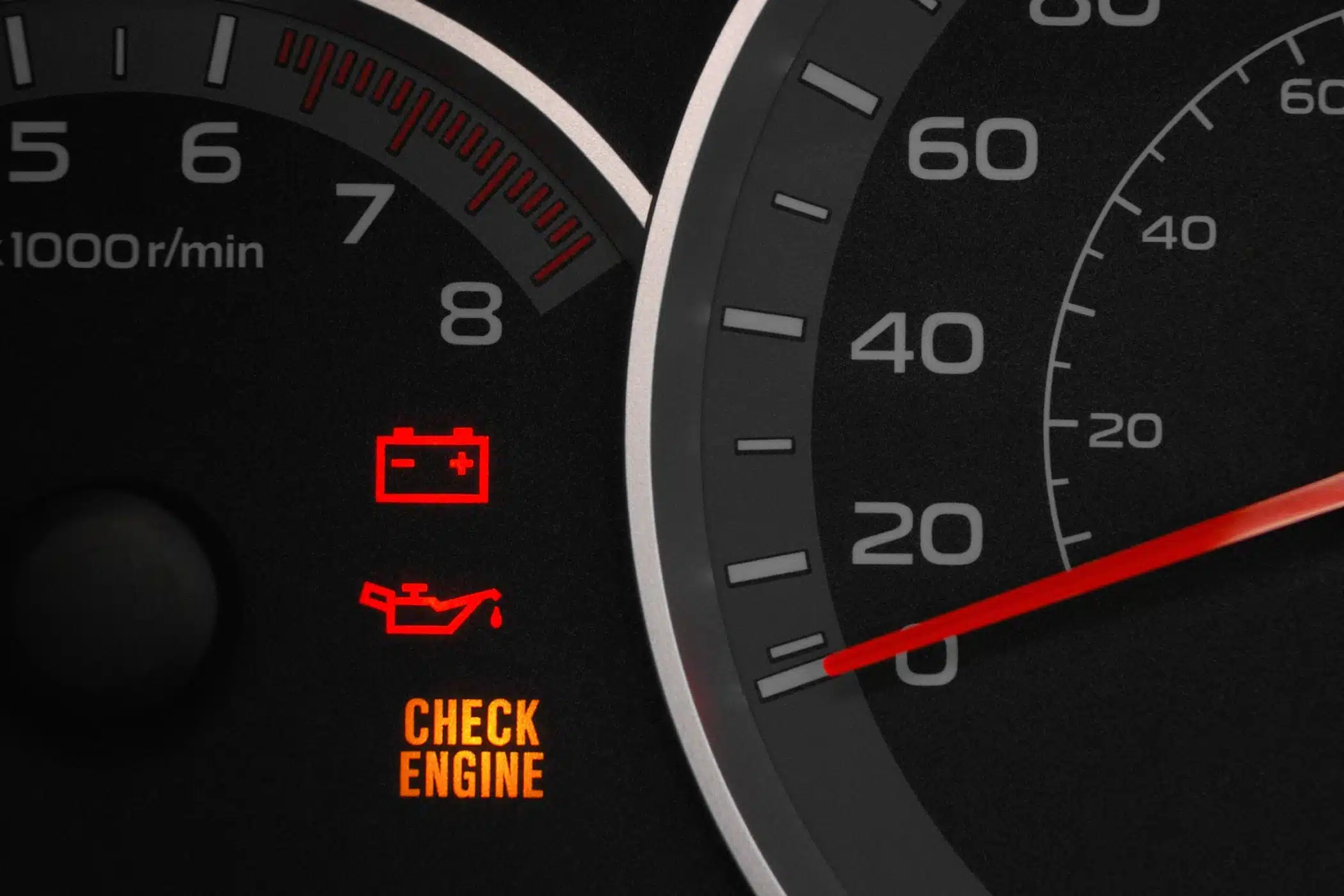
Illuminated check engine light – often accompanies fan problems
- Fan runs for 15+ minutes after shutdown
- Battery drains overnight (fan pulls significant power)
- Check engine light is on (scan for codes like P0128)
- Engine temperature gauge stays cold or erratic
- Overheating during driving
If ignored, a constantly running fan can lead to a dead battery, poor fuel efficiency, or overlooked cooling system failures.
Real Shop Story: 2014 Chevrolet Silverado Cooling Fan Issue
A customer brought in their 2014 Silverado because the fan stayed running after turning off the key (sometimes with an intermittent check engine light).
Our diagnostic process:
- Verified the concern and checked fluid levels.
- Scanned for codes: Found P0128 (“Engine Coolant Temperature Below Thermostat Regulating Temperature”).
- Tested the cooling system operation.
Result: The thermostat was stuck open, preventing the engine from warming up properly. The ECU detected a cooling issue and ran the fan post-shutdown as a safety measure.
We replaced the thermostat, cleared the code, and test-drove—no more fan issues! A straightforward fix that prevented potential engine damage.
How to Diagnose and Fix a Cooling Fan That Won’t Turn Off

Professional diagnosis of cooling system problems at a shop like LMC Complete Automotive
Basic Checks You Can Do:
- Check coolant level (when engine is cold).
- Look for leaks or low fluid.
- Note how long the fan runs and any warning lights.
Professional Diagnosis (Recommended):
Bring it to a trusted shop like LMC Complete Automotive for:
- Code scanning
- Testing the coolant temp sensor, thermostat, and relays
- Pressure testing the cooling system
Most fixes are affordable (e.g., thermostat replacement or sensor/relay swap).
Prevent Cooling Fan Problems
- Maintain proper coolant levels and flush per your owner’s manual.
- Use quality coolant.
- Address check engine lights promptly.
- Avoid short trips that don’t let the engine fully warm up.
Conclusion: Don’t Ignore a Persistent Cooling Fan
A briefly running fan after shutdown is usually nothing to worry about—it’s protecting your engine. But if your car fan stays on too long, it often points to a simple, fixable issue like a bad sensor or thermostat.
For more technical details on why electric cooling fans often run briefly after engine shutdown, see this guide from AA1Car.com.
Ready for a professional diagnosis? Schedule with LMC Complete Automotive today—we offer convenient drop-off, courtesy shuttle, and transparent $89 diagnostic pricing for issues like this.
Visit our scheduling page or call us for expert help keeping your cooling system in top shape.
Updated December 2025 with current diagnostic insights.